12 Best Conversation Starter Games for Couples

Some couples can talk for hours — about logistics. What's for dinner, what needs to get done this weekend, what happened at work. That's not the same as actually connecting, and most people know it.
Conversation starter games cut through the surface. They're designed to generate the kind of exchanges that remind you why you like this person — not just what you need to coordinate with them. The best ones feel more like a game than an intervention, which is exactly what makes them work.
These 12 picks range from completely free browser apps to research-backed card decks to simple homemade alternatives. All of them generate real conversation.
What Makes a Great Conversation Starter Game for Couples?
Goes beyond surface level. Asking about favorite movies is fine. Asking what movie changed how you see the world is a conversation. The best games push past the obvious.
Creates genuine vulnerability without force. The goal isn't to simulate therapy — it's to lower defenses enough that real things come up naturally. Games that feel too heavy or prescriptive create resistance. The best ones sneak depth in through play.
Works at any stage of the relationship. A question set that only works for new couples isn't very useful at year three. The best conversation games offer something regardless of how long you've been together.
Feels like fun, not homework. If it feels like a relationship exercise assigned by a counselor, couples disengage. Format matters — playful framing, variety, and a game-like structure keep both people invested.
Generates follow-up. The best prompt isn't one that gets answered and moves on — it's one that sparks a ten-minute tangent neither of you expected.
The List: 12 Best Conversation Starter Games for Couples
#1: Never Have I Ever Online — Couples Edition
Players: 2 | Setup: 0 min | Cost: Free
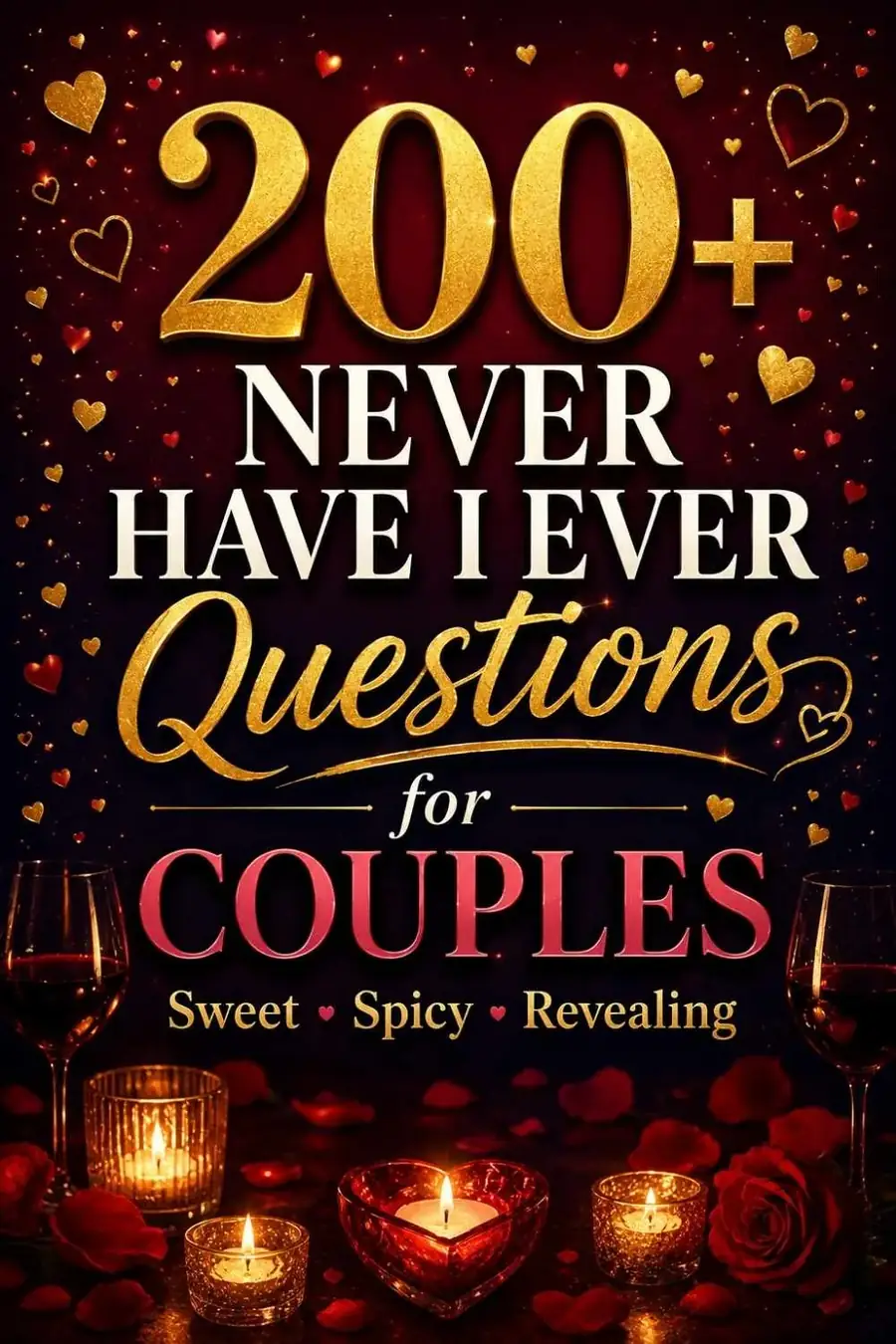
Never Have I Ever Online's couples mode is built specifically for this. The prompts span everything from playful ("Never have I ever fallen asleep during something my partner was really into") to genuinely revealing ("Never have I ever reconsidered a relationship decision I made early on"). The range is the point — you're not building up to the heavy questions, you're cycling through the full spectrum.
The game format removes pressure. You're reacting to prompts, not interviewing each other — which paradoxically makes people more honest. Something comes up in a game that wouldn't come up in a direct conversation, and then you're talking about it anyway.
Zero setup, no account required. Works on any phone or laptop. It's the fastest way to go from "we should talk more" to actually talking.
Best for: Couples at any stage who want real conversation without the formality of a sit-down discussion.
#2: Would You Rather Online — Couples Edition
Players: 2 | Setup: 0 min | Cost: Free
Would You Rather frames relationship questions as binary dilemmas — would you rather know your partner's honest opinion of your flaws, or never have to hear them? The choice matters less than the explanation.
The couples edition leans into lifestyle, future planning, and relationship hypotheticals. It's lighter in tone than a direct question set, but the conversations it generates are often more honest because the choice format makes people defend a position rather than just describe a feeling.
Best for: Couples who prefer debate-style conversation over reflective question-and-answer.
#3: The 36 Questions (Arthur Aron Study)
Players: 2 | Setup: 5 min (find the list) | Cost: Free
The 36 Questions come from a 1997 psychology study by Arthur Aron — designed to accelerate interpersonal closeness by escalating vulnerability in a structured way. The questions build across three sets, each one going deeper. By the final set, you're answering things like: "If you were to die this evening with no opportunity to communicate with anyone, what would you most regret not having said?"
It's the most research-backed option on this list. It was written up in the New York Times Modern Love column in 2015 and sparked a wave of couples trying it on date nights. The list is freely available online — just print it or pull it up on a phone.
Best for: Couples ready for a genuinely deep dive — this is the high-intensity option.
#4: TableTopics Cards
Players: 2+ | Setup: 0 min | Cost: $25–30
TableTopics makes physical card decks specifically for couples, with questions ranging from nostalgic ("What's a memory from early in our relationship you still think about?") to forward-looking ("Where do you want to be in ten years that we haven't talked about?"). One card per round, discuss until it runs dry, move on.
The physical format helps — you can shuffle, draw randomly, and hold onto cards you want to come back to. There's also a "Couples" version and a "What Would You Do?" version for variety.
Best for: Couples who prefer a physical object over a screen, especially for a dedicated date night.
#5: Gottman Card Decks App
Players: 2 | Setup: 5 min (download app) | Cost: Free
The Gottman Institute — known for decades of research on what makes relationships work — released a free app with multiple card decks: Open-Ended Questions, Salutation, Expressing Needs, and more. The questions are warm rather than clinical, designed around their concept of "love maps" — how well you actually know your partner's inner world.
It's more structured than most options here, which some couples appreciate. Each deck has a specific purpose, so you can choose based on what you actually want to work on.
Best for: Couples who want depth grounded in relationship science rather than entertainment.
#6: Two Truths and a Lie — Couples Version
Players: 2 | Setup: 0 min | Cost: Free
The standard format, but with a rule: at least one of your truths must be something your partner doesn't already know. This reframes the game entirely — you're not just trying to stump them, you're actually revealing something.
Long-term couples often discover they still have surprises here. Pre-relationship stories, childhood memories, opinions held privately — the "new to you" rule surfaces all of it.
Best for: Couples who've been together long enough that standard games feel redundant.
#7: Finish the Sentence
Players: 2 | Setup: 0 min | Cost: Free
Write out (or look up) a list of sentence starters and take turns completing them out loud. "The thing I love most about us is..." / "I wish I had told you earlier that..." / "Something I want to do together that we've never done is..."
No app, no purchase, no download. The open-ended format means answers go wherever they go — there's no "correct" response, which removes the pressure of direct questions.
Best for: Couples who find direct questions confrontational but open endings easier.
#8: The Ungame
Players: 2–6 | Setup: 5 min | Cost: $15–20
The Ungame is a non-competitive card game with no winners, no points, and no scores — just questions and the agreement to listen without interruption when someone answers. It's been around since the 1970s and still holds up because the format is genuinely unusual: you're not trying to beat anyone, you're just talking.
There's a couples edition with questions calibrated for relationships rather than general conversation. The no-interruption rule sounds simple but changes how people listen.
Best for: Couples who want a completely structured format where the listening is as intentional as the talking.
#9: Intimacy Deck
Players: 2 | Setup: 0 min | Cost: $15–20 (physical) or Free (app versions)
Intimacy Deck is a card set designed specifically around relationship depth — covering emotional intimacy, physical connection, shared history, and future intentions. The questions are more direct than most and designed to be used over multiple sessions rather than in one sitting.
The physical deck is available on Amazon. Digital versions with similar question sets exist as apps (Paired, Lasting) if you'd rather not buy anything.
Best for: Couples who want a dedicated relationship-building tool rather than a casual game.
#10: Couple's Trivia
Players: 2 | Setup: 5 min | Cost: Free
Write a list of trivia questions about each other — birthdays of family members, first job, childhood pet's name, biggest fear, dream destination — and quiz each other. Keep score. The gaps in your answers are often more interesting than the correct ones.
This works especially well for couples who've been together a few years and assume they know everything. The assumption is usually wrong, and finding that out is part of the fun.
Best for: Long-term couples who want a gentle reality check on how well they actually know each other.
#11: Guided Journal Prompts — Read Aloud
Players: 2 | Setup: 5 min (find a prompt list) | Cost: Free
Pull up a couples journal prompt list and read questions aloud instead of writing. "Describe a moment when you felt truly understood by me." "What's something you've wanted to bring up but haven't known how to start?" The journal format tends to generate more thoughtful answers than rapid-fire game questions.
Works well as a wind-down activity — quieter, slower, and easier to go deep without the competitive energy of a game.
Best for: Couples who want slower, more reflective conversation — ideally with tea or wine and no time pressure.
#12: Open-Ended Question Jar
Players: 2 | Setup: 15 min (one-time setup) | Cost: Free
Write 20–30 questions on slips of paper, fold them, and put them in a jar. Draw one per week. Questions can be anything: "What's a dream you've stopped talking about?" "What's something you hope never changes about us?" "If we could start over knowing what we know now, what would you do differently?"
The jar format distributes the work — you make the list once and use it for months. It also removes the "whose turn is it to plan something" dynamic, which is its own low-key source of friction.
Best for: Couples who want a sustainable long-term habit rather than a one-night activity.
How to Choose
For tonight with zero prep: Never Have I Ever Online couples mode or Would You Rather Online. Both open in a browser, no account required.
For a dedicated date night: The 36 Questions or TableTopics Cards — both have enough material for a full evening and generate the kind of conversation that continues past the last question.
For long-term couples who think they know everything: Couple's Trivia or Two Truths and a Lie (couples version). The gaps will surprise you.
For couples who want something research-backed: Gottman Card Decks (free app) or the 36 Questions — both have academic grounding on what builds closeness.
For building a long-term habit: The Question Jar. Set it up once, draw from it weekly.
If one person is resistant to "relationship games": Start with Never Have I Ever Online or Would You Rather — the game framing removes the loaded feeling. Once you're in a good conversation, nobody cares that a game started it.
❓ Frequently Asked Questions
Do conversation starter games actually help couples connect?
Research says yes — the 36 Questions study showed that structured, escalating self-disclosure creates real closeness even between strangers. The format works because it removes the awkwardness of "bringing things up" — both people are playing the same game, so vulnerability is expected rather than unusual.
What's the best conversation game for couples who feel disconnected?
Never Have I Ever Online's couples mode or the Gottman Card Decks. Both are designed to move past surface-level exchange into things that actually matter, without the clinical tone of explicit relationship exercises.
How often should couples use conversation starter games?
Once a week is sustainable and effective. Daily feels like homework; monthly isn't often enough to build a habit. The Question Jar format works well at weekly cadence — low commitment, consistent payoff.
Are these good for new couples?
Most of them, yes. The 36 Questions and Never Have I Ever Online couples edition both work well for new relationships — they accelerate the "getting to know you" phase without forcing it. Avoid Couple's Trivia until you've actually built the history it's testing.
What if one partner doesn't want to play?
Start with something lighter — Would You Rather or Never Have I Ever rather than the 36 Questions. Game formats are easier entry points than explicit "let's talk about our relationship" conversations. Once you're in it, resistance usually drops.